What Happens When the Organization Can Learn Once — and Remember It?
Why durable organizational context — not another chatbot — is the next level of enterprise AI.
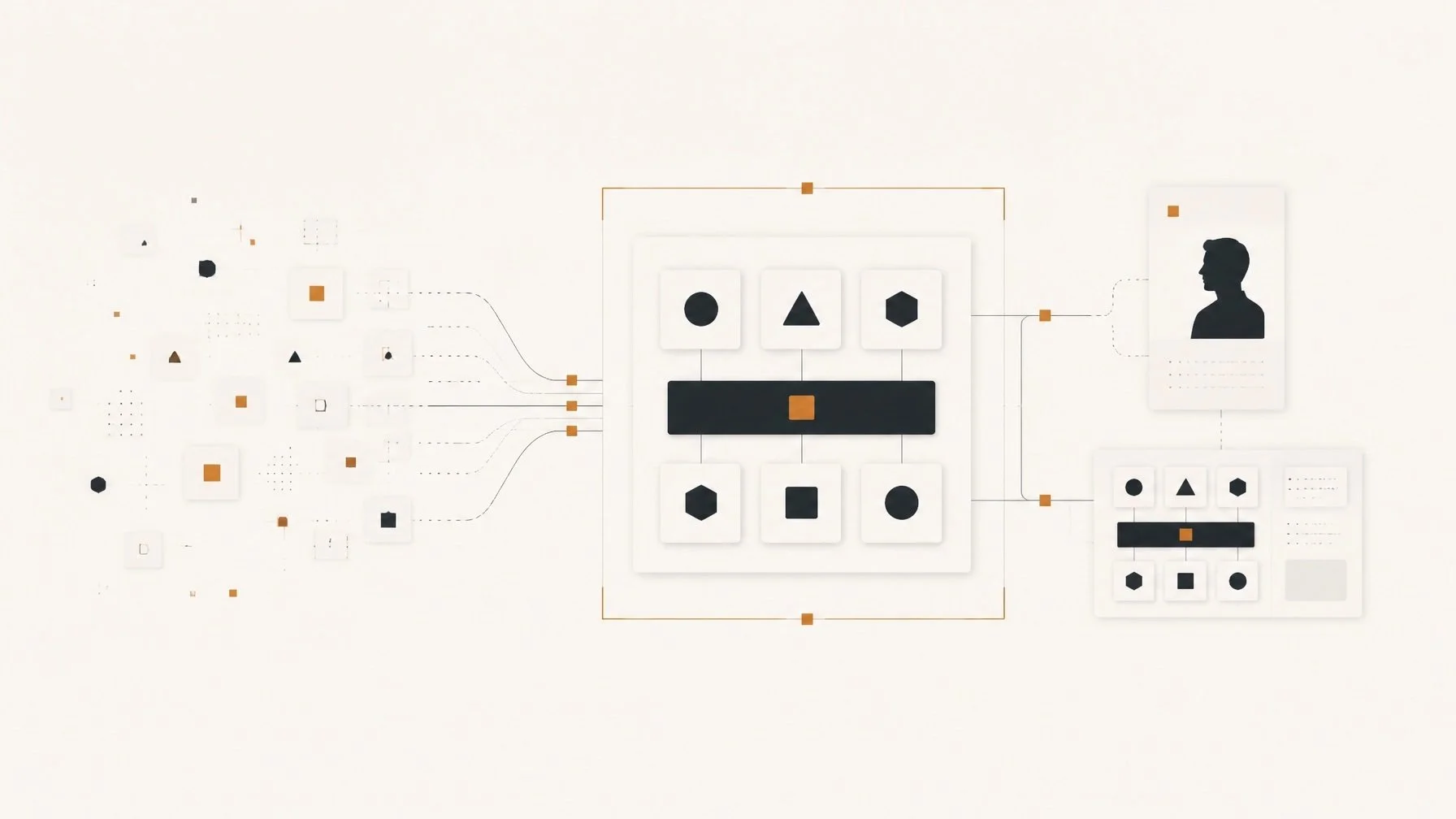
ICG generates valuable knowledge continuously.
An engagement produces an outcome. A team discovers a workaround. A decision gets made after three weeks of debate. Someone finds a failure mode in an AI workflow. A leader realizes a process everyone assumed was working is, in fact, being held together with calendar invites and optimism.
ICG learns.
And like a lot of firms, it can also lose what it learns if that knowledge stays buried in project artifacts, meeting notes, chat histories, individual memory, disconnected systems, and the occasional document with a name like Final_v7_REALLY_FINAL.docx.
That is the problem this paper is about.
ICG is building its own institutional Brain for ICG’s own operations. Not as a client product. Not as some shiny packaged offering with a clever label slapped on it. As internal infrastructure for helping the firm learn, retain judgment, reuse what works, and improve over time.
The reason is practical.
ICG wants to retain lessons from its work. Identify patterns across engagements. Preserve decisions and judgment. Reuse proven capabilities. Improve delivery. And give its AI systems durable ICG context instead of making them guess from scraps like caffeinated interns with API keys.
This is not primarily a documentation problem. It is a memory problem.
And once a firm starts using AI seriously, it also becomes an intelligence-architecture problem.
AI systems can help people work with organizational knowledge, but only if the firm has a reliable way to determine what it knows, what it believes, what it has decided, and what is no longer true.
That requires more than storing documents and adding a search box.
It requires institutional memory the firm can govern and actually use.
Why this matters now
ICG is building this now because AI raises the price of organizational forgetfulness.
People are testing tools. Workflows are changing. Decisions are getting made faster. AI-assisted work produces prompts, outputs, corrections, exceptions, lessons, and patterns at a pace that makes casual memory management look especially flimsy.
The more useful AI becomes, the more expensive it is for a firm to keep relearning itself.
Without durable internal memory, ICG would remain more dependent than it should be on:
The person who remembers what happened last time
The team that happens to have the old project folder
The employee who knows which version of the process is actually used
The leader who can explain why a decision was made two years ago
The one practitioner who has discovered that a particular AI workflow fails under a particular condition
That is not a strong operating system for a firm. It is folklore with better software and a cleaner font.
The issue is not preserving every word ever written.
The issue is preserving what is useful, authoritative, reusable, and still true so the firm can get better instead of merely busier.
If AI systems are going to support the work, they also need durable ICG context. Otherwise every interaction starts too close to zero, and the firm pays for that gap over and over again.
A Brain is not simply a knowledge base
One of the first things ICG had to get clear on was that its internal Brain could not just be a prettier knowledge base wearing expensive shoes.
A knowledge base can absolutely help.
It can store policies, process documentation, engagement records, FAQs, templates, and other material. It can make information easier to find and share. Good knowledge management is still useful. Nobody is arguing with filing cabinets just because AI showed up.
But storage and retrieval alone do not create governed institutional intelligence.
ICG’s Brain has a broader job.
It needs to carry:
What ICG knows
How ICG operates
What ICG has decided
What has worked before
What has failed or created friction
Which practices are preferred
Which assumptions are still being tested
What should no longer be treated as true
A knowledge base answers a retrieval question:
> Where is the information?
ICG’s Brain has to support an operating question:
> What should ICG — and the systems working on its behalf — understand, remember, use, question, or stop relying on?
That is not a branding exercise. It is a design decision about authority, context, reuse, and change.
The Brain ICG is building is governed organizational context available to humans and AI alike.
It does not treat every captured artifact as truth. It does not assume the newest statement is automatically correct. It does not let a model quietly upgrade an unreviewed suggestion into firm doctrine because everyone was busy and the output sounded polished.
The point is simple: help the firm learn without giving up judgment.
The architecture: Signals → Candidates → Governed Knowledge → Maintenance
The architecture ICG designed for its own Brain starts with a simple premise:
> Valuable firm knowledge is produced by real work, but it does not become institutional knowledge automatically.
Something has to happen between “we noticed this” and “ICG now relies on this.”
What follows is the architecture ICG is implementing for itself and what the design made clear.
The Brain is structured as a four-stage flow.
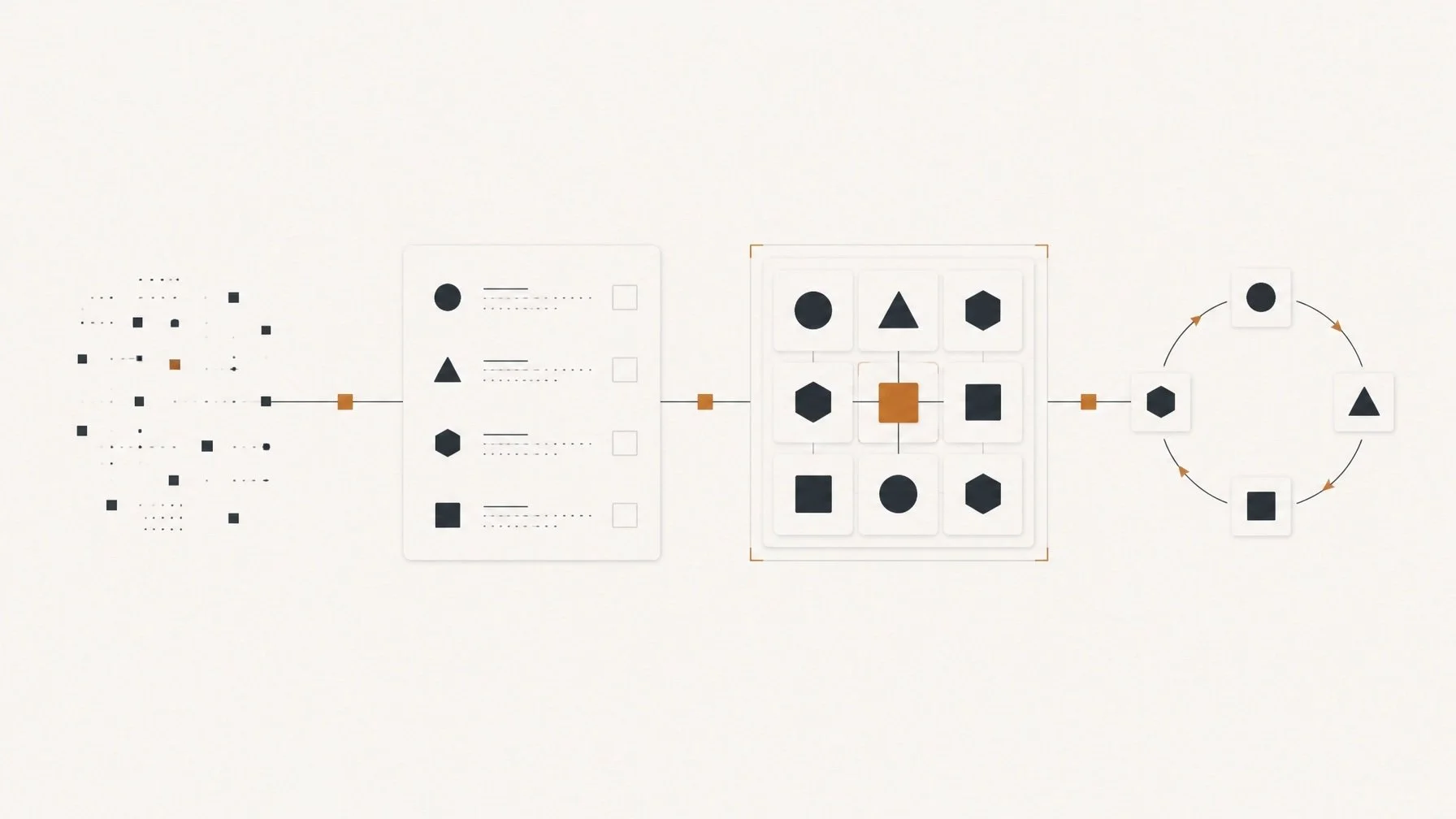
1. Signals
Signals are the raw material produced by ICG’s work.
They may include:
Outcomes
Decisions
Lessons
Friction points
Corrections
Exceptions
New context
Repeated questions
Evidence that a process is or is not working
AI interactions that reveal a useful pattern or a dangerous one
A signal is not automatically important. It is simply something that may become important.
One design lesson here was obvious and annoying in the way useful things often are: firms routinely skip capture and then act surprised when knowledge disappears. People are expected to notice useful learning, document it, classify it, and share it while also doing the work that produced it.
That is a charming fantasy.
For ICG, signals need to surface through normal operating activity. The point is not to create a ceremonial parade for every insight. The point is to create a path through which meaningful observations can enter the Brain.
2. Candidates
A candidate is a captured signal that may deserve to become durable ICG knowledge.
This stage introduces judgment.
Candidates are compared against what ICG already knows. They are evaluated for questions such as:
Is this relevant beyond the immediate situation?
Is it supported by enough evidence?
Who has authority to confirm it?
Does it conflict with existing knowledge?
Is it a temporary condition or a durable pattern?
Is the source identifiable?
What would happen if people or AI systems relied on it?
This is where provenance becomes important.
ICG needs to know where a piece of knowledge came from, when it was captured, who contributed it, and why it was accepted. Not because every idea needs a twelve-page approval packet. Nobody needs that kind of hobby.
The reason is simpler: context affects trust.
A lesson from one experiment is not the same as a confirmed firm practice. A comment in a conversation is not the same as an approved decision. A model-generated answer is not the same as a source of authority.
One of the clearest design lessons is that candidate status matters. It creates a holding area for useful possibilities before they get promoted into institutional context and start affecting future work.
3. Governed Knowledge
Governed knowledge is what ICG has decided is durable enough to reuse.
This may include an approved practice, a confirmed lesson, a decision history, a known limitation, a process rule, a preferred approach, or a condition that requires escalation.
The key point is that promotion is governed.
Humans decide what becomes firm truth.
AI can help identify patterns. It can compare signals. It can suggest candidates. It can flag contradictions and surface material that deserves review.
It does not get to decide, on its own, what ICG believes.
That boundary is essential. AI can process more material than people can reasonably review one item at a time. Lovely. Still not the same as authority.
Governed knowledge also has to be usable. It needs enough context to guide action, not just enough text to satisfy a search result and make everyone feel technologically accomplished.
A useful entry might explain:
What ICG believes or does
Why it believes or does it
Where the knowledge applies
Who owns it
What evidence supports it
When it was last reviewed
What exceptions exist
What would cause it to change
The output is not a larger pile of information.
It is a more reliable context layer for the firm and for the AI systems working with that context.
4. Maintenance
Knowledge changes.
Processes change. Decisions are superseded. Assumptions age. New evidence contradicts old guidance. A workaround becomes standard practice — or gets abandoned because it caused three new problems.
A Brain therefore needs maintenance by design.
Maintenance includes:
Detecting contradictions
Recording supersession
Reviewing aging knowledge
Retiring outdated guidance
Preserving decision history
Updating ownership
Identifying gaps
Checking whether knowledge is still being used appropriately
This is the part most institutional-memory conversations prefer to mumble past. Everyone loves capture. Capture feels productive. Maintenance is where the adult supervision lives.
ICG’s design logic here is straightforward: if retained knowledge is never reviewed, the Brain becomes a museum of once-useful ideas. Worse, it may look authoritative while quietly misleading the people and systems relying on it.
The architecture is not complete when knowledge is captured.
It is complete when knowledge can remain trustworthy as conditions change.
Governance is not an accessory
In ICG’s design, the separation between signals, candidates, governed knowledge, and maintenance is itself a governance mechanism.
It prevents several categories of material from being treated as interchangeable:
A raw observation is not an approved practice.
A model suggestion is not a firm decision.
A temporary workaround is not necessarily a standard process.
An old policy is not automatically current.
A repeated behavior is not automatically an authorized behavior.
These boundaries allow AI to learn from ICG without autonomously rewriting firm truth.
The Brain can make more context available to models while keeping authority with ICG.
Which is the whole point.
Governance here is not a policy document sitting beside the architecture like a sad side salad nobody ordered. Governance is built into how knowledge moves.
Provenance, human promotion, contradiction, supersession, aging, and retirement are not administrative decorations. They are controls on the meaning and reliability of what gets reused.
The objective is not maximum control.
Maximum control produces slow systems, excessive permission-seeking, and people finding workarounds because the official process is unbearable. Congratulations, you built bureaucracy with Wi-Fi.
The objective is enough clarity for people and AI systems to act confidently within defined boundaries.
ICG should be able to answer:
What may AI use independently?
What requires human review?
What requires explicit approval?
What must be escalated?
Who owns the outcome?
What evidence supports the guidance being used?
Clear authority makes routine work faster because the conditions are established in advance.
Context sovereignty: the Brain belongs to ICG
One of ICG’s most important design decisions was where the firm’s memory should live.
The Brain is ICG’s.
Claude, ChatGPT, agents, and whatever model arrives next are consumers of that context. They are not the owners of it.
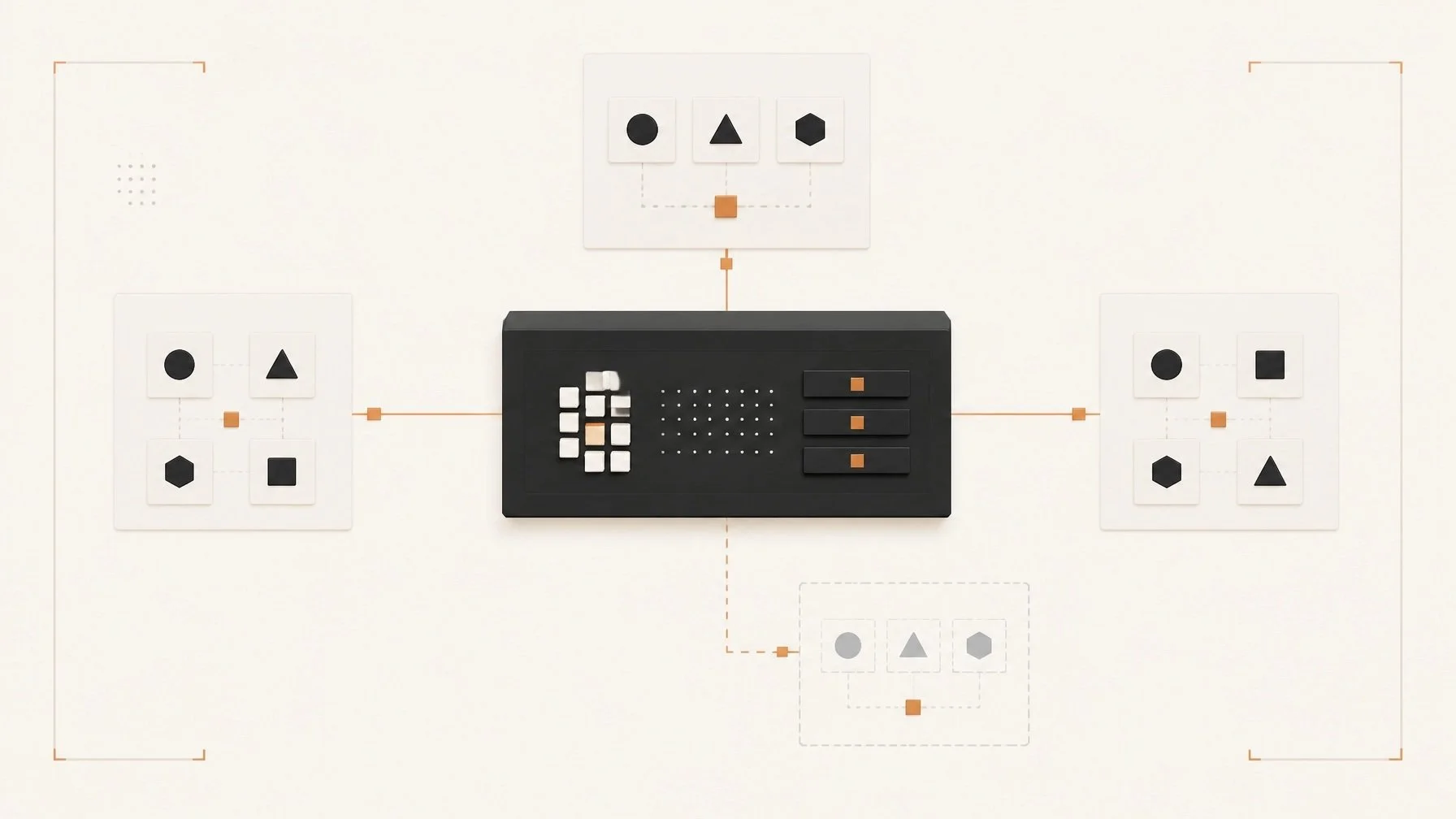
This is context sovereignty.
ICG’s memory should not be trapped inside whichever AI vendor is fashionable this quarter. Models will change. Vendors will change. Pricing will change. Capabilities will change. Some models will be replaced, and some will be remembered mainly through screenshots and strong opinions on social media.
ICG’s institutional intelligence should outlast those changes.
A model-independent architecture allows ICG to:
Preserve its context in systems it controls
Apply its own access and authority rules
Provide different models with the context they need
Record how important outputs were produced
Compare models without rebuilding firm memory
Replace a model without losing accumulated knowledge
This does not mean models are interchangeable in every practical sense. They have different capabilities, limitations, costs, and risk profiles.
It means ICG does not confuse a model with its own intelligence.
The model is a tool that works with the Brain.
The Brain is the firm asset.
For other organizations, the implication is clear enough: if your memory lives inside the tool, then your intelligence architecture is borrowing its spine from a vendor.
How the learning loop compounds
The intended loop inside ICG is straightforward:
Real work produces signals → useful lessons are captured → candidates are evaluated → governed knowledge becomes reusable → future humans and AI systems start smarter.
Then new work produces more signals.
Over time, ICG should not simply accumulate more information. It should improve the quality of the context available for decisions and work.
A future team should be able to see not only what was done, but why. An AI assistant should be able to distinguish current guidance from retired guidance. A leader should be able to understand which practices are established and which are still experimental. A new employee should not need to reconstruct firm history through informal interviews and strategic eavesdropping.
The loop compounds when learning changes future behavior.
That is the proof framing here.
ICG is not theorizing about institutional intelligence from a safe distance. It is building the infrastructure that allows the firm to learn, retain judgment, and improve through use.
The useful output is not a record that merely exists. It is a decision made faster, a mistake avoided, a workflow improved, an escalation handled correctly, or a system given better context.
The cost of getting this wrong
When organizational knowledge evaporates, the costs are rarely listed as “memory costs.” They appear elsewhere:
Repeated mistakes
Re-litigated decisions
Slow onboarding
Inconsistent execution
Dependence on individual experts
Weak handoffs
Duplicated work
AI systems receiving incomplete or outdated context
Leaders making decisions without knowing what has already been tried
There is also a second risk: preserving knowledge badly.
A Brain without governance can make weak information easier to reuse. It may give outdated guidance a false appearance of authority. It may surface a confident answer based on a suggestion nobody approved. It may blend conflicting practices into a response that sounds polished and is operationally wrong.
“Give AI access to all the documents” is not a memory strategy.
It is an ingestion strategy.
More documents do not automatically create better judgment. Retrieval does not resolve authority. A model can find information without knowing whether the organization accepts it, whether it is current, or whether it applies to the present situation.
The hard work is not only making context available.
It is deciding what context deserves trust.
Recommendation: what ICG decided, and what others can take from it
ICG decided to design the memory architecture before scaling AI consumption.
That was the call.
Not because tools do not matter. They do. But choosing tools before deciding how firm knowledge should be captured, evaluated, governed, maintained, and reused is a terrific way to automate confusion.
So ICG started with the knowledge the firm repeatedly needs in order to operate well:
Decisions people keep revisiting
Lessons that should influence future work
Known constraints and failure modes
Practices that require consistency
Context AI systems need to work safely
Knowledge that must be reviewed or retired over time
From there, the design logic followed:
Signals need a path into the system
Candidates need review before promotion
Governed knowledge needs ownership and usable context
Maintenance needs to exist from day one, not as a future aspiration everyone promises to handle later
ICG also decided to keep firm memory separate from the model layer so the organization retains control as tools change.
And the first implementation is intentionally focused.
This is not a request to migrate every file ever created into one glorious digital junk drawer. It is not an excuse to invent a taxonomy with 47 categories and no actual users.
It is internal operating infrastructure for helping ICG learn and get better over time.
For other organizations, the implication is not “buy a Brain from ICG” because that is not what this is.
The implication is simpler: if you are watching a firm build its own institutional intelligence seriously, pay attention to the design choices. What gets captured. What gets promoted. Who has authority. How contradictions get handled. How maintenance is built in. And whether the memory belongs to the organization or to the tool vendor currently enjoying a nice quarter.
That is where the real learning lives.
Five implications other organizations can take from watching this build
> 1. Useful learning does not become institutional memory by accident.
> If signals have no path into review, they stay trapped in conversations, artifacts, and somebody’s overconfident recollection.
>
> 2. Not everything captured deserves promotion.
> Candidate status matters because raw observations, experiments, and model outputs should not all be treated as settled truth.
>
> 3. Authority has to be designed into the memory.
> Someone needs to be able to confirm, reject, qualify, supersede, and retire knowledge without turning the process into a bureaucratic talent show.
>
> 4. Maintenance is part of the architecture, not cleanup work for later.
> If retained knowledge cannot age, contradict, and get retired properly, the system will eventually serve polished nonsense.
>
> 5. Institutional memory should outlast any single AI tool.
> If changing models means losing context, then the organization does not own its memory nearly as much as it thinks it does.
The lesson
This paper is not arguing that firms should admire institutional intelligence in theory.
It is a set of field notes from ICG building its own Brain so the firm can retain what it learns, preserve judgment, improve delivery, and give its AI systems durable ICG context.
The next level of enterprise AI is not another chatbot placed in front of a disconnected organization.
It is an organization that can learn from its own work, govern what it learns, and make that intelligence available where decisions and actions happen.
A Brain is not a glorified folder.
It is not a model with a long prompt.
It is not a collection of documents that happens to be searchable.
For ICG, it is a governed memory system for the firm — one that can distinguish a signal from a decision, a candidate from a standard, and current knowledge from knowledge that has reached retirement age.
That gives humans a stronger starting point.
It gives AI better context.
And it gives the firm something more durable than dependence on whoever remembers what happened last time.
The goal isn't to give AI access to more documents. It's to give ICG a memory it can govern — and intelligence it can reuse.

Julie Traxler is the founder of Integration Consulting Group and an operator specializing in M&A execution and AI operationalization. Her work focuses on turning complex, high-risk initiatives into operating systems businesses can actually execute and sustain.